
The Industrial Landscape of Tevershall
Lady Chatterley's LoverThis flow traces how the ruined mining landscape shapes the novel’s social atmosphere and Connie’s perception of the life awaiting her.
increasing Bearing strength in each event
 decreasing
Bearing strength in each eventdecreasingThe Burning Pit Bank
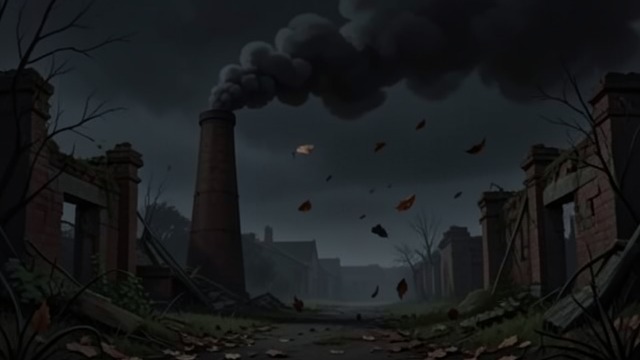
The Burning Pit Bank
Industry at the doorstep
The Chatterleys return to Wragby Hall near Tevershall, where the colliery’s smoke and burning waste intrude on the estate. Even flowers collect soot under the same darkened sky.
Connie initially accepts this landscape as an awful fact that cannot be changed. Its persistence gradually makes resignation itself feel like part of the injury.
A divided country
Wragby and Tevershall occupy neighboring ground but seem to belong to different kinds of existence. Their residents share a region without sharing a common social world.
The physical closeness of estate and village intensifies the sense of separation. Industry has not merely altered scenery; it has made human fellowship seem almost impossible.
A Village Seen from Within
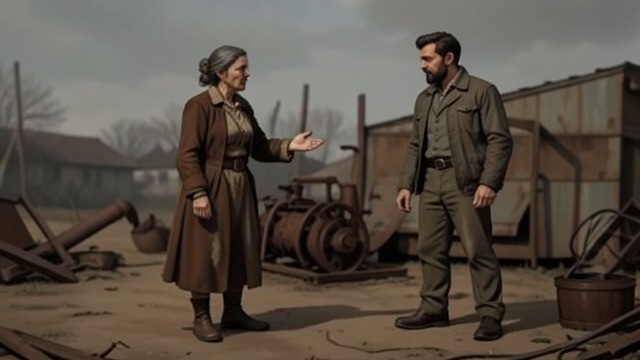
A Village Seen from Within
Gossip as social knowledge
Mrs Bolton brings accounts of Tevershall into Wragby. Her stories reveal conflicts over marriage, money, work, and respectability that the village’s drab exterior had concealed from Connie.
Clifford listens for useful material and a route into local affairs. Connie hears how the same hunger for status and spending crosses class boundaries.
The industrial future
Mrs Bolton describes declining pits, new works, mechanized production, and workers uncertain of their place. The shift from older mining practices to machinery promises efficiency while threatening livelihoods.
Her account unsettles Clifford and draws him toward the colliery business. For Connie, it confirms that the mining crisis reaches from the landscape into people’s bodies and prospects.
One England Replaced
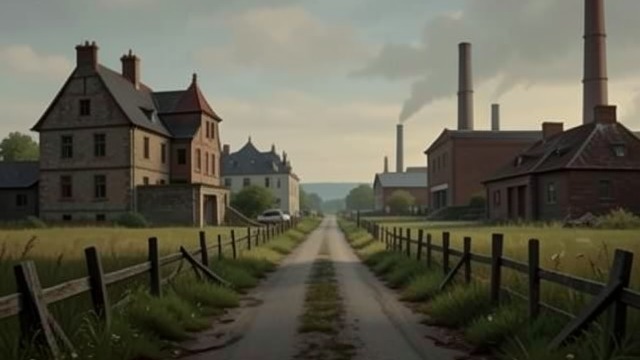
One England Replaced
A landscape of transitions
Connie travels past old halls, miners’ dwellings, railways, and new industrial installations. The country displays several historical worlds at once, but none appears securely connected to the next.
Shipley Hall and other landed places seem vulnerable to the costs and pressures of the modern economy. Industry that once supported estates now helps displace them.
The broken continuity
Connie sees new streets and machinery spreading over older settlements and fields. The change is not an organic renewal in her eyes, but one order blotting out another.
The journey deepens her fear about what kind of society is being produced. Her wish for a child now collides with her sense that neither the old hierarchy nor the industrial present offers a humane home.
When Connie and Clifford settle at Wragby in 1920
After Mrs Bolton arrives at Wragby
During Connie’s journey through Uthwaite and the surrounding district
